
The Linux Experience So Far
My interest in Linux was initially driven by curiosity and, admittedly, a desire to challenge myself. Linux always seemed like one of those things that required a certain level of technical knowledge to properly use, and that complexity was both its appeal and my hesitation. I wanted to try it, but I was also intimidated by the idea of having to configure and manage an entire operating system myself. That eventually changed when a research project involving an Orange Pi required me to work with Ubuntu. I use arch now by the way.
And that was pretty much where it started.
Ubuntu was my first proper Linux experience. (I had used Kali before, but let's leave that in the dark side of things.) The project itself involved working primarily through the terminal, but even that was enough to get me interested. Eventually, I installed Ubuntu on my own laptop and started using GNOME. It was familiar enough to ease me into the Linux environment, but different enough to make me appreciate what I was getting into. And yes, I was absolutely proud of being able to say I was running Linux.
It was around this time that I started appreciating what Linux had to offer: minimalism, flexibility, and, above all, control over my own system. No unnecessary software that I didn't ask for, no feeling that the system was entirely dictated by the manufacturer, and the ability to actually decide how my computer operated. I could choose what software to install, what services to run, what desktop environment to use, and how I wanted my workflow to look. Linux gave me the freedom to work with my computer rather than simply work around it. That level of control was something I found genuinely appealing.
Then came Arch Linux.
Arch had always been something I was aware of, but I never really considered installing it. Most of what I read about it made the installation process sound unnecessarily difficult, so I kept putting it off. Then I started seeing more and more people using it. PewDiePie was using Arch !? The Primagen, my goat, was using it. And somewhere along the way, I figured I might as well give it a shot.
It has been hell, but GODDAMN, it's beautiful.
Ricing and setting up the system took me MONTHS. I was clueless about a lot of things, and ChatGPT wasn't exactly helping much with code suggestions or terminal navigation, so I had to rely heavily on documentation, forums, and other online resources to figure things out.
I had to manually configure Wi-Fi just to get things working. The installation process, mirrors, packages, and configurations gave me a considerable amount of trouble. Bluetooth was another thing I had to set up and troubleshoot myself. I spent a lot of time figuring out what was missing, what wasn't working, and why. Three months in hell itself, troubleshooting, configuring, reading documentation, and occasionally breaking my own system and my own self.
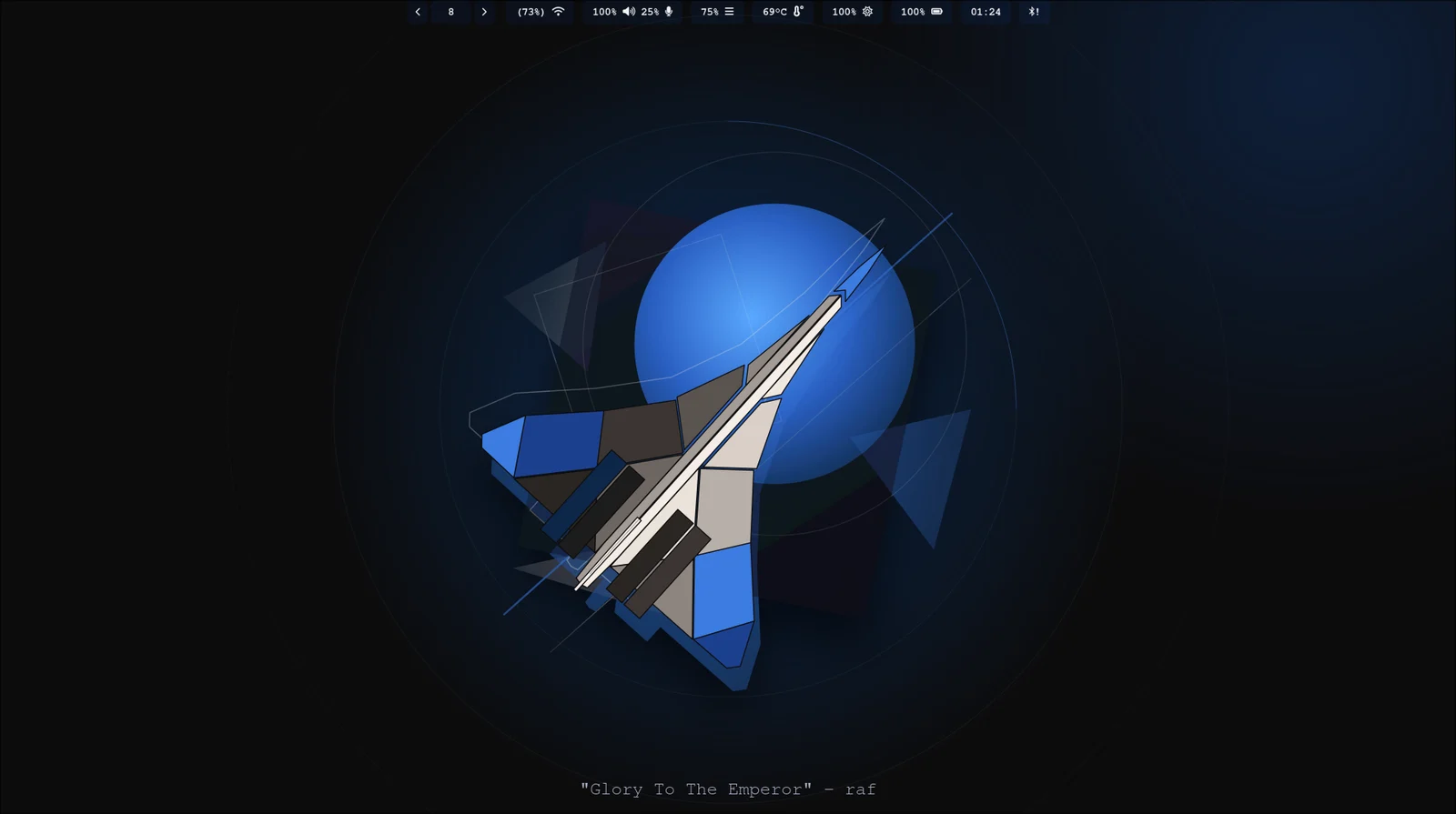
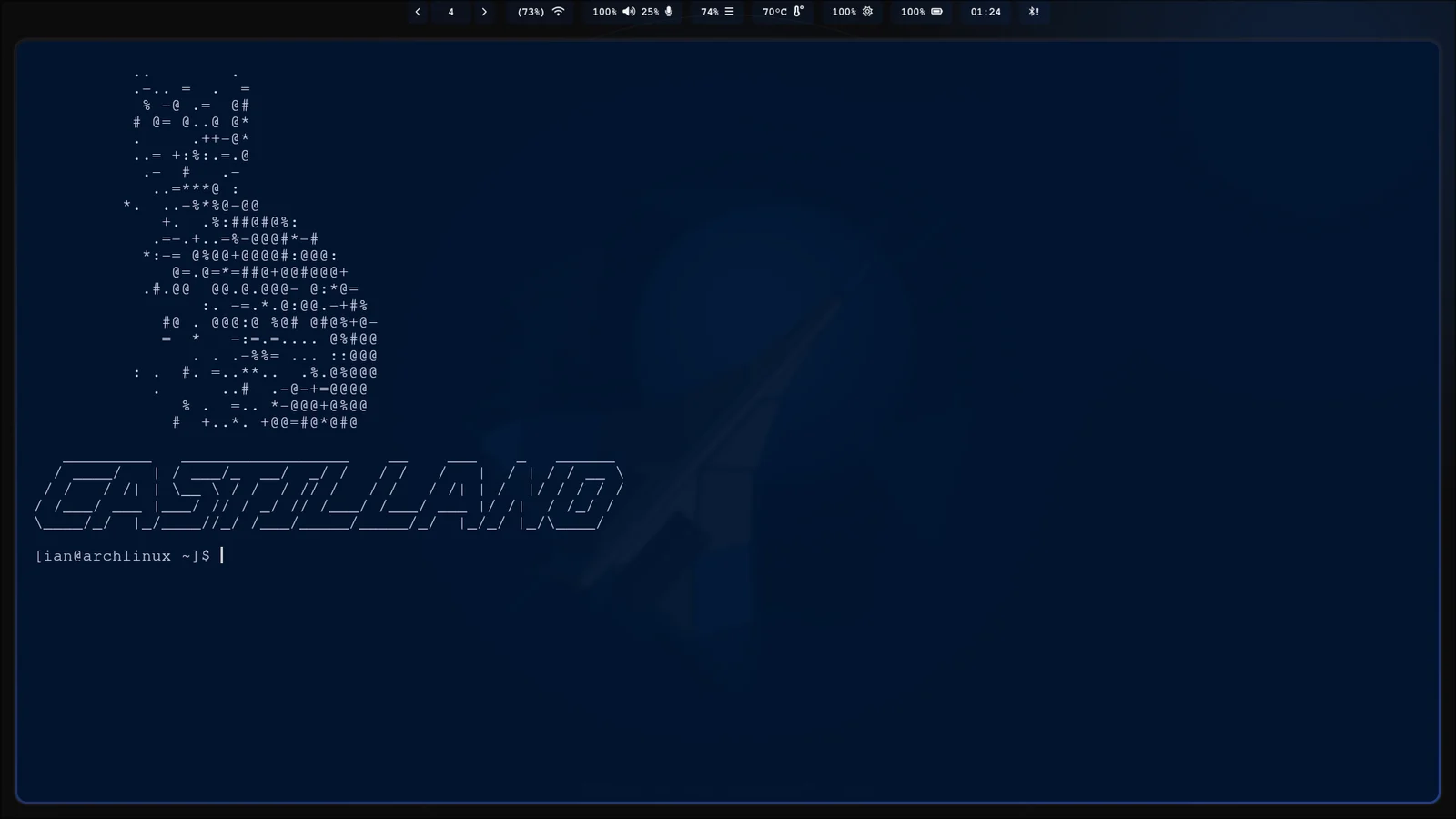
And then there's ricing. I spent a lot of time manually configuring Hyprland, Waybar, my terminal, fonts, keybindings, animations, and pretty much everything else on my desktop. I wanted it to look good and actually feel like my own setup, which sounds fun until you're spending hours messing with CSS and config files just to change how something looks. I eventually ran out of ideas. I had so many things I wanted to try at first, but somewhere along the way, my creativity just burnt out. Turns out, making your desktop look good from scratch is harder than just watching those pretty Linux setups on YouTube.
But eventually, I got used to it. I installed Neovim, configured my environment, and gradually became more comfortable with the system. I wasn't just following instructions anymore; I was starting to understand what I was doing. And at this point, I feel very much at home with Arch.
And honestly, Linux, particularly Arch, has some advantages over Windows that I genuinely appreciate.
The customization is practically endless. The minimal installation means I can keep my system relatively lean and install only what I actually need. The package management system is convenient, the AUR opens up an enormous range of software, and the rolling-release model keeps my system continuously updated. Compared to Windows, I also appreciate having more control over what runs on my machine.
Windows, on the other hand, has increasingly felt like an operating system that wants to sell me things. Between the preinstalled applications, advertisements, Microsoft account prompts, services I never asked for, and constant pushes toward its own ecosystem, navigating Windows sometimes feels less like using my computer and more like navigating a storefront. And don't even get me started on Microsoft 365. Everything seems to have some subscription, upsell, or ecosystem integration attached to it. At this point, I wouldn't be surprised if the next Windows update asked me to subscribe just to open Task Manager. Capitalism truly has no boundaries.
There's also the bloat. Storage gets occupied by applications, caches, updates, temporary files, and other things that aren't always immediately obvious to the average user. Sometimes you genuinely wonder where the hell your storage went, and finding out what is actually taking up space isn't always as straightforward as you'd expect.
Linux isn't magically free from these problems, but at least I have significantly more control over what gets installed and how storage is used. I can inspect packages, remove what I don't need, check disk usage through the terminal, and actually investigate what's consuming my resources instead of having to guess. I don't have to accept a bunch of software simply because it came with the operating system.
Of course, that freedom comes with its own price. Setting up, configuring, and debugging Linux can be genuinely exhausting. Sometimes an issue that should take five minutes ends up consuming an entire afternoon because of a missing package, an incorrect configuration, a broken service, or something I didn't even know existed. But oddly enough, that's also part of the fun. I get to investigate what's happening, check logs, read documentation, experiment with different solutions, and eventually figure out what went wrong. The Arch Wiki alone has saved me countless times. It isn't always a pleasant process, but there's a certain satisfaction in fixing something yourself and actually understanding why it broke in the first place.
And performance-wise, I've had some experiences that genuinely shocked me. I managed to run a heavy Unity Editor session on Linux. Mind you, I was running it on my Dell Latitude 3310 2-in-1, a relatively modest machine with an 8th-generation Intel processor, integrated Intel UHD Graphics 620 on the Core i3/i5 variants, and configurations that typically came with anywhere between 4 and 16 GB of RAM. It's a business-oriented convertible laptop, not some gaming machine with a dedicated GPU. Specifications vary depending on the configuration.
Yet I was actually able to run Unity Editor and work with it. That thing can make some gaming laptops heat up like a damn kettle, and here I was running it on this little machine. I'm not claiming Linux magically makes hardware more powerful, nor that Unity would necessarily perform worse on Windows under identical conditions. But having a relatively lightweight operating system, fewer unnecessary background processes, and greater control over what runs on my machine certainly contributes to the experience. Considering the hardware I was working with, it was a pretty satisfying sight.
More importantly, Linux has made me more familiar with the system I use every day, which is something I never really experienced with Windows. I actually know where to look when something goes wrong. I understand more about services, packages, configurations, permissions, and the general workings of my operating system. I still have plenty to learn, but that is precisely what makes it interesting.
Am I saying Windows is pretty crappy? Yes.
Windows, in my experience, often prioritizes convenience, monetization, and a standardized user experience at the expense of flexibility and transparency. Updates, background processes, bundled applications, advertisements, ecosystem integration, and restrictions on how certain parts of the system can be modified can sometimes make it feel like I have less control over my own machine. Linux isn't perfect either, and some hardware, software, and games can be considerably more troublesome to get working. But at least when I'm using Linux, particularly Arch, I have the freedom to decide how I want my system to function rather than being confined to the defaults imposed on me.
Is Linux any better? Maybe. It ultimately depends on your requirements, preferences, and how comfortable you are managing your own system. Linux isn't inherently better at everything, and Arch certainly isn't for everyone. But if you enjoy tinkering, troubleshooting, learning, programming, and having control over your machine, it can be an incredibly rewarding experience.
All I can say is that Linux, I use Arch btw, has been frustrating, occasionally miserable, and a lot of fun.