
A Character Analysis of Frederick the Great
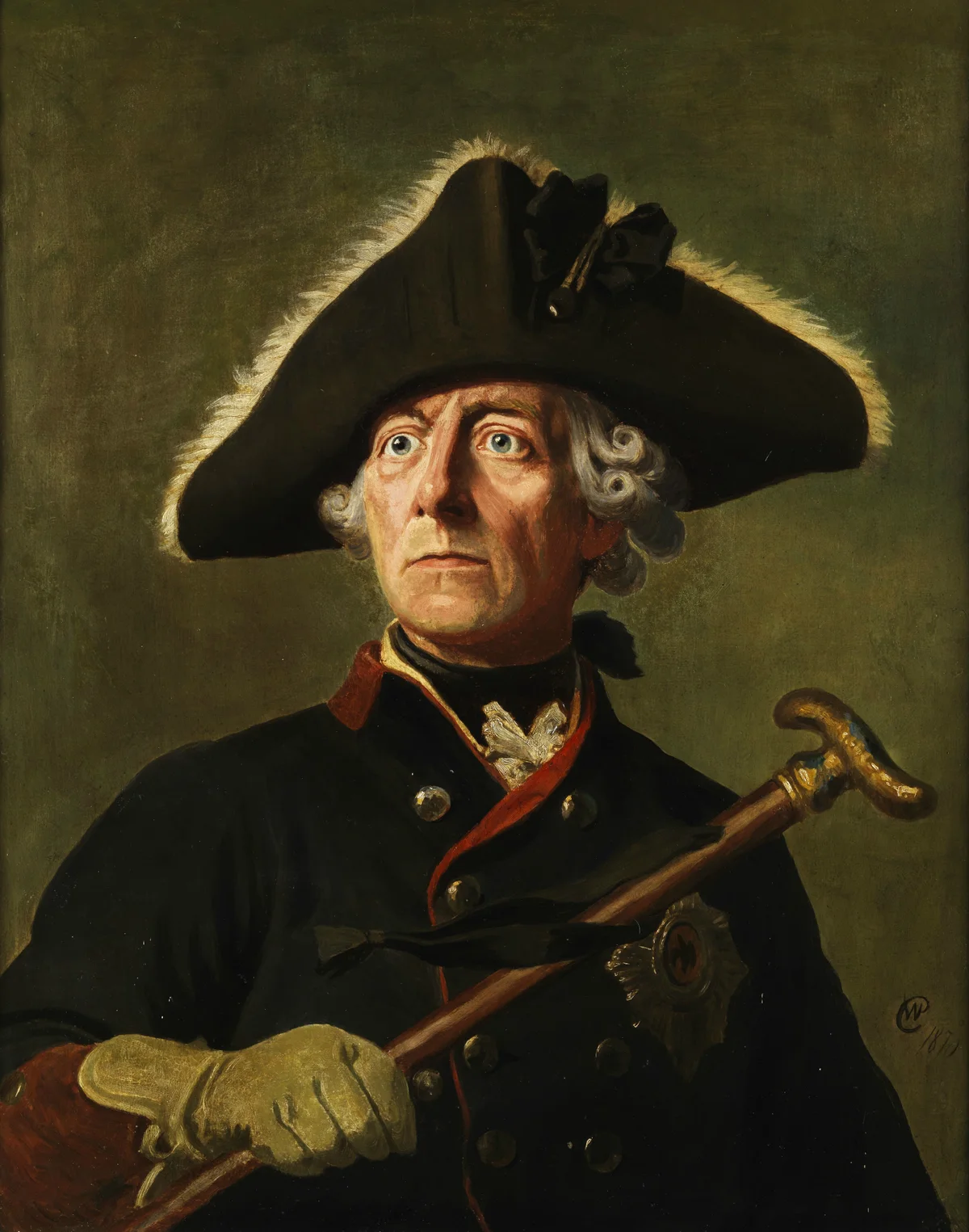
It is of my greatest fascination to study a man whose greatness was not solely established upon the battlefield, but also upon the faculties of his intellect. Frederick II of Prussia, more commonly remembered as Frederick the Great, was a monarch of remarkable contradictions: a man of philosophy, music, and reason, yet also a man of ambition, conquest, and absolute authority. He was a ruler who sought to embody the ideals of an enlightened sovereign, believing that the strength of a nation rested not merely upon its armies, but upon the competence and discipline of those entrusted to govern it.
His childhood, however, was far from the freedom he would later seek in intellectual pursuits. Under the rigid authority of his father, Frederick William I, he was subjected to relentless discipline, an upbringing that sought to suppress his inclinations toward literature, music, and philosophy. It is perhaps through such circumstances that we begin to understand the disposition of Frederick himself. A man raised under the weight of authoritarian discipline, yet who cultivated an appreciation for reason, culture, and intellectual independence. His attempted escape from his father's control, and the execution of his companion Hans Hermann von Katte, left an indelible mark upon his formative years, shaping a man who would eventually govern with both calculated discipline and a guarded disposition.
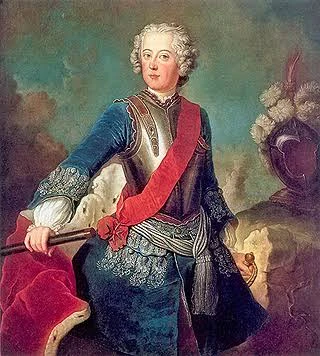
Yet, Frederick was not merely a man who found refuge in the arts. He was a man who actively sought the intellectual company of his age, corresponded with Voltaire, composed music, wrote poetry, and engaged in philosophical thought. He believed that a sovereign must possess more than the authority of inheritance; he must possess the capacity to govern. His conception of kingship was one of responsibility, though not necessarily of equality. He was an enlightened absolutist, a man who believed that reason should guide the state, but that the state should remain firmly under the authority of its monarch. Herein lies one of the greatest contradictions of his character: he admired the principles of intellectual freedom, yet never relinquished the political power that defined his position.
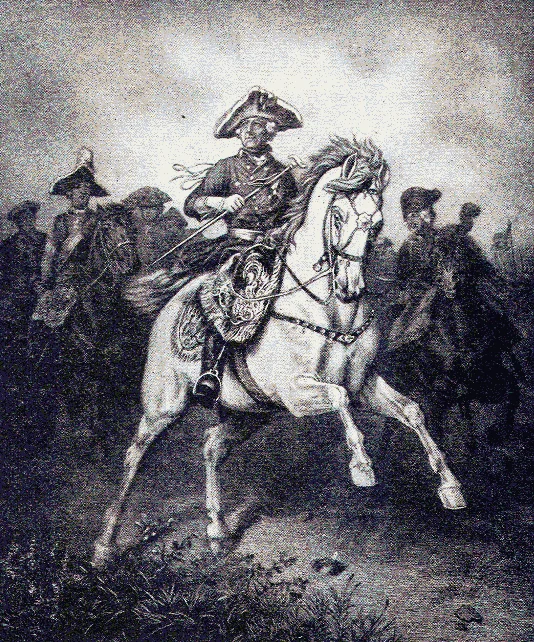
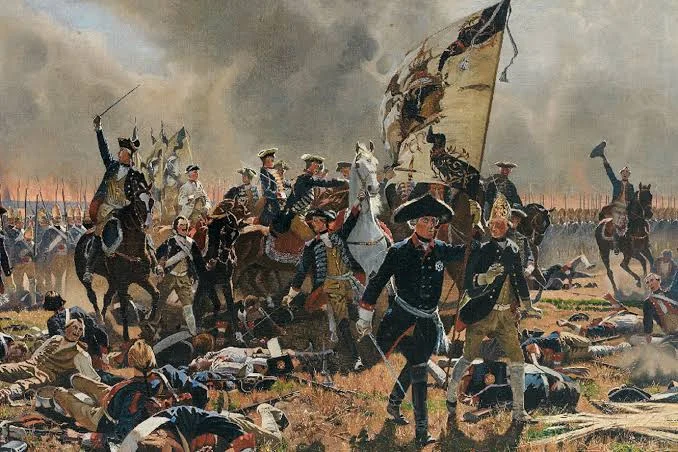
It is equally undeniable that Frederick was a man of formidable ambition. His campaigns, particularly the conquest of Silesia and his leadership during the Seven Years' War, elevated Prussia into a formidable European power. His military judgment, discipline, and perseverance demonstrated a capacity to withstand circumstances that threatened the very survival of his kingdom. Yet, we must not mistake military brilliance for moral infallibility. His ambitions were pursued through warfare, and the greatness he established for Prussia came at the cost of human suffering. A man may be admired for his capabilities, but admiration must never become the abandonment of judgment. History demands that we recognize both the victories he secured and the consequences of the ambitions he pursued.
As a ruler, Frederick regarded himself as the first servant of the state, a principle that reflected his understanding of kingship as an obligation rather than merely a privilege. He pursued judicial reforms, encouraged agricultural development, promoted immigration, and supported religious tolerance. His governance was marked by a desire for efficiency, institutional discipline, and the strengthening of Prussia. Yet, his understanding of service was paternalistic, for he believed that the sovereign must determine what was best for his subjects. He was willing to reform the state, but never to surrender the authority through which he governed it. It is of this very contradiction that we find the distinction between a ruler who seeks to serve and one who ultimately believes that the authority to serve must remain his alone.
Frederick the Great remains a man whose legacy deserves neither blind admiration nor careless condemnation. He was an intellectual who embraced the arts, a strategist who defended and expanded his kingdom, and an administrator who sought to strengthen the institutions of his state. Yet, he was also an absolutist who pursued ambitions through war and believed that authority rested ultimately upon the sovereign. Perhaps the greatest lesson of his character is that greatness is not the absence of contradiction, but the recognition of it. The men we study in history are not beyond scrutiny, and their achievements must never excuse their shortcomings. To admire a man is not to surrender our judgment of him; rather, it is to understand him in his entirety.
Let us never mistake the greatness of a man for the perfection of his character. History is not written merely to glorify the victories of kings, nor to preserve their names upon the monuments of time, but to remind us of the consequences of their decisions, the principles they upheld, and the ideals they failed to fulfill. Frederick lived, governed, fought, and left a legacy that would endure long beyond his death. It is now upon us to examine that legacy with reason, humility, and discernment. For the true purpose of studying great men is not to become devoted to their names, but to understand what their lives teach us, what their failures warn us against, and what their virtues may yet inspire us to become.